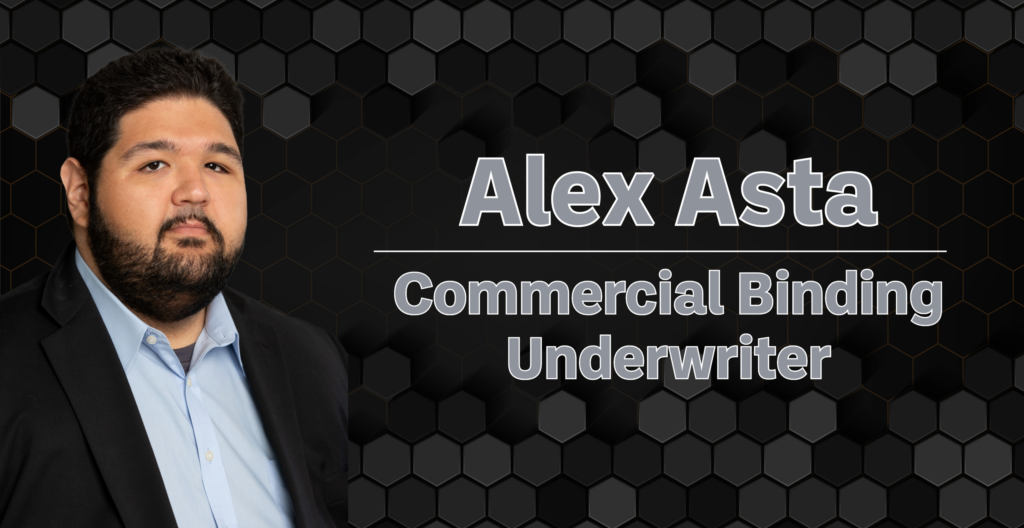
Alex Asta Joins Arlington/Roe

INDIANAPOLIS, IN – Arlington/Roe, managing general agent and wholesale insurance broker, announces the appointment of Alex Asta, Commercial Binding Underwriter.

Alex has extensive experience in underwriting, risk evaluation and data analysis within the insurance industry. He previously worked as a property and casualty underwriter at JM Wilson. Before that, Alex worked in tech sales as an account representative at CDW

Alex graduated from Illinois State University with a bachelor’s degree in integrated marketing and communication.

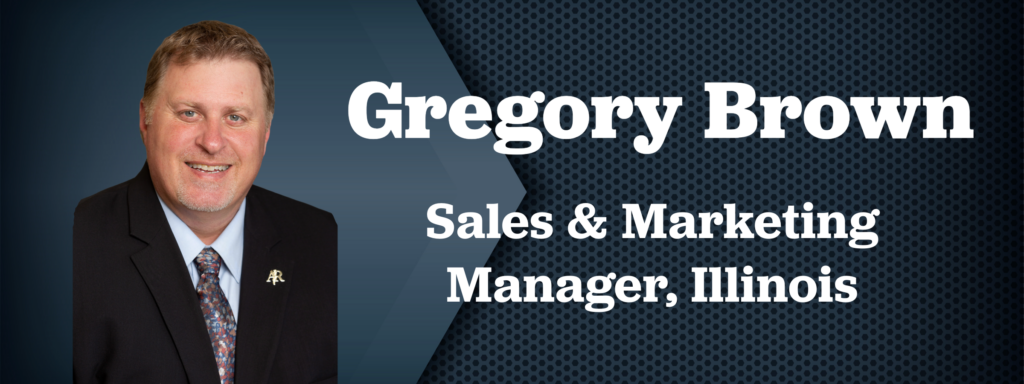
Gregory Brown Joins Arlington/Roe

INDIANAPOLIS, IN – Arlington/Roe, managing general agent and wholesale insurance broker, announces the appointment of Gregory Brown, Illinois Sales & Marketing Manager.

Gregory has extensive experience with sales and marketing in the insurance industry. He previously served as director of sales and marketing at The Bar Plan. Prior to that, Gregory held roles at Midwest Family Mutual as the sales and marketing manager for Illinois and Missouri and spent 16 years at Erie Insurance as a sales manager.

Gregory graduated Summa Cum Laude from the University of Illinois Urbana-Champaign, where he earned his bachelor’s degree in finance and agriculture economics. He holds both CIC and AINS designations and is an active member of the American Risk and Insurance Association.

Jen Dugan Joins Arlington/Roe

INDIANAPOLIS, IN – Arlington/Roe, managing general agent and wholesale insurance broker, announces the appointment of Jen Dugan, Indiana Sales & Marketing Manager.

Jen has extensive experience with sales and marketing in the insurance industry. She previously worked as the sales and agency relations specialist at JM Wilson for over seven years. Before JM Wilson, she spent nearly fourteen years on the retail side at State Farm Insurance in multiple roles, such as a pip claim processor, agents draft authority claim representative, & fire field adjuster. During this time, she worked with agency liaison, auto property complex, and catastrophe claims.

Jen graduated from Central Michigan University and holds a Bachelor of Applied Arts degree (BAA) with a major in entrepreneurship. She was named Company Person of the Year for the Professional Insurance Agents of Indiana (PIA) in 2022.

Did you know that Architects & Engineers Professional Liability coverage is not just for Architects & Engineers?

designer graphic creative creativity working together coloring u

An Architects & Engineers Professional Liability policy is also designed for Interior Designers, Land Surveyors, Pollution Consultants, Project Managers and Other Construction Design Professionals. Your design professional clients could get sued for things like flawed design, errors or miscalculations, defects, not delivering the services they were contracted to provide, among other wrongful acts. Those errors or flawed designs can lead to costly construction delays, property damage and defense costs.

CLAIMS EXAMPLE

An interior designer designs the lighting fixtures himself for the 450 guest rooms at a hotel. When they are completed, he discovers that due to a communication error, the fixtures, which were produced overseas, do not meet UL standards. All 450 fixtures must be replaced. The foreign manufacturer claims that the designer did not communicate this requirement, so they′re not responsible.

Don’t leave your insured defenseless. Let our brokers help you design a solution to your insured’s Architect’s & Engineers Professional Liability needs!

Download the flyer.

FAQs on the 2022 Transportation Market

What challenges are you seeing this year?

A better question might be: what challenges are we not seeing this year? But in all seriousness, the main challenge we are seeing right now is economic. Over the course of one year, inflation has gone up 8.5%. You’re seeing it all over the news, but our customers feel it in a very real way. Particularly on the trucking side, the cost of diesel is very high. Operating on a day-to-day basis is now more expensive for our customers. This leads to our customers trying to manage costs, which includes insurance. What we are seeing is a lot more shopping, even internally with our book. Interestingly enough, our renewal retention this year is the best I have seen it, but it is a lot of work to make sure we are retaining. 

What are the hottest transportation target markets right now for Arlington/Roe?

We’re still seeing trucking, which makes up a big chunk of what we do. We’re also seeing a lot of garage activity and public auto as well. But we’re also starting to see more of some other operations that are a little outside of the typical application classifications, such as drive-away contractors. Additionally, we’ve been seeing more shopping on the public auto side, like buses and non-emergency medical transportation. 

Is the hard market affecting the transportation industry the same as others? What pricing changes are you seeing?

Prices are going northward, but I can’t say it’s necessarily because of the hard market. As I mentioned previously, we’re seeing a lot more of our target customers shop their insurance, particularly on the trucking side. They’re always a high shop segment, but there’s a lot more looking at cost than there used to be. Because our customers move economically like that, I wouldn’t say the increases are necessarily due to a hard market alone, but a few other factors. 

There are some hard market elements to the rising prices, meaning that liability judgments have gone up considerably. For example, in the trucking industry, every billboard you see out on the highway is for an injury lawyer. Their costs and the award size have gone up dramatically over the last five years. 

The other thing we’re seeing is when there are accidents (or even our garage repair shops) they’re having a hard time getting supplies like new parts and new vehicles. We know the cost is driven up for items, even just body parts, so it costs more just to replace something. However, there is so much competition in this business, that I wouldn’t necessarily call it true in our area. There is definitely a hard market going on across the industry, but I would say ours is a small chunk of that, but largely has to do with economic impact.

Do you have any new markets? If so, what is their focus?

We don’t have any brand-new markets, but we do have a new package, admitted direct bill product for the automotive industry, which is basically like the garage industry that is not dealers. So, think of tire dealers, mufflers, service work, bodywork, or paint shops. And we have a product that has property involved too, as well as mechanics E&O and is direct bill. In some states, we also have a premium trucking product that’s offering 5 to 10% credits on the right risk right now too. 

What would you like agents to know to help their submissions move faster?

Completed applications. No surprise there, right? It’s cliché, but it’s the truth. For example, on the trucking side, we don’t often get the driver employment history. That’s a significant rating factor, and I would say it’s something on the common list that gets missed a lot. Sometimes we will get an MVR, but we still need their employment history. Additionally, IFTAs are missed a lot as well, and they are not only an important rating factor, but some of our carriers (especially on the binding side) won’t bind without it. An example on the garage side, if they are a dealer, we need the number of dealer plates, a list of the employees and their MVRs. Again, these are significant rating factors and important ones. 

What are realistic expectations for a trucking and/or garage submission?

It depends. Size matters, right? If it’s a single-unit account for which we have binding authority, we could turn that around same-day, even day-to-day when we must submit to a carrier. I would only want to do that in a new venture type of situation, because that’s when we’re needing it quickly. But, if it’s something that gets submitted to a carrier for approval because it doesn’t fit within our binding guidelines, it’s going to take longer. Most of our carriers work with the effective date in mind, meaning the first one in isn’t necessarily always the first one getting worked on; it’s more based on the due date. 

We can’t really give a true concrete time calculation because it’s out of our hands to a degree. But I do want to emphasize the more time we have the better. We can do 11th-hour miracles, but ultimately the more time we have to work on a submission, the more time we have to place it with the right market and find the right solution.

This article was written in May of 2022. This information may have changed by the time you read this.

Download a Printable Version of this Article: Transportation FAQs

Delta-8 and Cannabis Insurance

Cannabis marijuana leaf closeup dark background. leaves of a marijuana

Delta-8 has become popular recently as consumers look beyond delta-9 and CBD for cannabinoid products, especially in states where marijuana is not legal. 

What is delta-8? 

Delta-8 is a cannabis compound that has a similarity to delta-9 THC, the main compound in cannabis that produces a high. The similarities between the two cannabinoids is in their chemical structures and names. THC’s scientific name is delta-9-tetrahydrocannabinol, or delta-9 THC or just delta-9. Delta-8 is short for delta-8-tetrahydrocannabinol, or delta-8 THC. Delta-8 can produce effects like regular delta-9 THC, but they are much less potent. 

Delta-8 products can create problems with some of our markets in getting cannabis risks written. While these products are technically legal under the 2018 Farm Bill, their legality is still hazy because, even though they are below the .03% limit, the chemical compounds in these products can still produce a high. Additionally, since delta-8 can be extracted from either hemp or cannabis, it is legal in states where delta-9 THC is illegal – sometimes. Nearly all delta-8 THC on the market today is manufactured from hemp-derived CBD, which makes it, in theory at least, part of a federally legal chain of origin. 

As a result, some states have outright outlawed these products, despite marijuana being legalized. New York has outlawed smokable delta-8 products, but not gummies. Arizona has outlawed it in general. So why is delta-8 outlawed in some states, but cannabis is not? The main reason is because of the chemical process used to create the product; as well as because in some states, you only have to be 18 to purchase delta-8, whereas the legal age to purchase cannabis is 21.

How does this affect premium? 

Any of the delta products limit our marketplace and create a higher minimum premium. For example, if we see a CBD retail shop where the minimum premium starts at $2,500. If that CBD shop sells delta-8 products, the minimum premium could go up to $5,000 or even $7,500! 

Ironically, marijuana businesses are a lot easier to write because they are so much more regulated than delta-8, hemp and CBD businesses

With global cannabis sales expected to increase from $13.4B in 2020 to $33.6B by 2025, this industry is one that your agency may start to see. We have markets for the following classes: LRO, dispensaries, grow operations, processing operations – extraction, testing labs, bakeries, greenhouses (limitations), plant coverage (for plants grown indoors only). We can go up to $15M property TIV on cannabis risks and $25M TIV on hemp/CBD risks. We also have GL options available with max limits of up to $10M, depending on the class.

Regardless of if your client is selling delta-8, delta-9, CBD or hemp, we are here to help you navigate this rapidly changing industry. Give us a call, and we can help you find the right solution.

Download a printable version of this article.

D&O Independent Liability

Group of people working out business plan in an office

Why should it matter to my insured?

INDEPENDENT DIRECTOR LIABILITY (PERSONAL PROTECTION POLICY):

Independent Director Liability coverage is good to carry, especially if your insured is a wealthy individual who serves as an independent director on multiple company boards. This policy would be in the name of the independent director and is designed as excess over any underlying coverage or indemnification. 

This coverage gives an extra layer of protection to the independent director (who cannot be an officer of the company) whether they are acting as an independent director for one company or several. 

It protects them while they sit on various boards of private, public and nonprofit companies. The coverage follows the independent director, even if they no longer actively serve on the board.

CLAIM SCENARIO

An independent director is serving on the board for XYZ Company. XYZ Company carries a $1 million limit on Side A and an additional Side A limit of $1 million. 

XYZ Company gets sued for $3 million and XYZ Company’s carrier provides the $2 million in
indemnity to the director and officer. 

The independent director can then get an
additional $1 million on their independent director’s liability policy, further protecting the personal assets of the independent director.

Now is the time to make sure you have a discussion with your insured about their Independent Director Liability Exposure. Reach out to one of our brokers for information on how to provide this important coverage to your insureds.

[su_button url=”https://arlingtonroe.com/products/directors-officers/” target=”blank” style=”flat” background=”#003d5b” size=”5″ icon=”icon: phone” icon_color=”#ffffff” text_shadow=”0px 0px 0px #000000″]Find out who to contact[/su_button]

Download the Flyer: Independent Director Liability

Is your Insured’s Independent Contractor an Employee?

The gig economy is full of freelancers or independent contractors who provide their services to a company or that company’s client. These workers are often online platform workers, on-call workers, or contract firm workers. They most likely work out of their home.   

If your insured thinks they are hiring an independent contractor, they may want to verify if that is true. Currently, there are five factors used by the DOL to determine if they are an independent contractor or an employee. Out of that, two factors have the most weight. These two factors can be confusing, so that is why President Joe Biden recommends using the CA ABC Test as the standard.

The CA ABC Test was designed to make it easier to ensure these individuals are not misclassified and have workplace rights and protections if they are entitled to them. By using this test, a worker is an “employee” unless the below criteria apply to them:

  1. The employer does not control their work nor give them direction. They are also not controlled by the employer.

  2. The type of work they do is not something that the employer does within their own business.

  3. The work is done by someone who has their own business doing the work that they do.

Currently, over 30% of the workforce are independent contractors. If your insureds are using independent contractors and classifying them incorrectly, they may not be covered in their EPL policy. Independent contractors are generally not covered in most EPL policies. Your insured will need to make sure they are included either in the base policy or added by endorsement. Play it safe, and make sure your independent contractors are covered!

Reach out to one of our brokers for help with your Employment Practices Liability needs!

Download the flyer: Independent Contractors

[su_button url=”https://www.arlingtonroe.com/specialties/professional-liability” target=”blank” style=”soft” background=”#DF6A2E” size=”5″ icon_color=”#ffffff” text_shadow=”0px 0px 0px #000000″]View our Professional Liability Page[/su_button]

Arlington/Roe sponsors the Alzheimer’s Association Greater Indiana Chapter 2021 Indianapolis Walk to End Alzheimer’s

We are excited to share that we are proud sponsors of the 2021 Indianapolis Walk to End Alzheimer’s. The Walk is how we support Hoosier families and caregivers impacted by Alzheimer’s, and our support funds vital no-cost resources we encourage you to share.

As you may have heard, the 2021 Indianapolis Walk will be in person on 10/2 at IUPUI’s Carroll Stadium. For details and to join the movement, please visit act.alz.org/Indianapolis.

Thank you for your business, and for making a difference for all those impacted by Alzheimer’s and other dementia.

The Alzheimer’s Association Walk to End Alzheimer’s® is the world’s largest event to raise awareness and funds for Alzheimer’s care, support and research. Held annually in more than 600 communities nationwide and 13 locations in Indiana, this inspiring event calls on all ages and abilities to reclaim the future for millions.

Families facing Alzheimer’s and all other dementia need us now more than ever — and with your help, we can be there for them with free 24/7 care and support while accelerating critical research. Join us at alz.org/indiana/walk.

Download our flyer: Indy Proud Sponsor flyer_team_Arlington Roe

What do you know about National Insurance Day?

Did you know June 28 is National Insurance Awareness Day? This day serves as a reminder to all small business owners to review their insurance policies to make sure they have the right coverage for their organizations. While the origin of this day is a mystery, what’s widely known is how important insurance is in many aspects of our personal and professional lives.

You may want to advise your clients to take the opportunity to review their insurance policies and be sure they have the right coverage in place. June 28 can also serve as a good opportunity to teach your clients about the value of insurance and educate them more on what you can offer. 

Insurance Facts

It’s easy to take insurance for granted, as professionals in this industry. Whether you are a seasoned professional, or just starting your insurance career, how much do you know about the insurance industry’s origin? 

  1. According to Brittanica, “Insurance in some form is as old as historical society.” Bottomry contracts were known to merchants of Babylon as early as 4000–3000 BC. The Hindus also practiced Bottomry in 600 BC and it was well understood in ancient Greece as early as the 4th century BC. “Under a bottomry contract, loans were granted to merchants with the provision that if the shipment was lost at sea the loan did not have to be repaid. The interest on the loan covered the insurance risk.” 
  2. Ancient Roman Law recognized the bottomry contract in which an article of agreement was drawn up and funds were deposited with a money changer. Marine insurance became highly developed in the 15th century. In Rome, there were also burial societies that paid the funeral costs of their members out of monthly dues. The insurance contract also developed early. It was known in ancient Greece and among other maritime nations in commercial contact with Greece.
  3. Insurance, as we think of it in the modern age, came into existence sometime around the Great Fire of London, where the devastation that took place brought about the idea of property insurance. Some insurance companies were started in England after 1711, during the so-called bubble era. Many of them were fraudulent, get-rich-quick schemes concerned mainly with selling their securities to the public. Nevertheless, two important and successful English insurance companies were formed during this period—the London Assurance Corporation and the Royal Exchange Assurance Corporation. Their operation marked the beginning of modern property and liability insurance. 
  4. The famous Lloyd’s of London had its start in a coffee shop. Although the first informal gatherings of shippers and investors around 1688 were not intended to produce an insurance mechanism, Edward Lloyd’s coffeehouse on London’s Tower Street witnessed the first days of what was to become the world’s best-known insurance underwriting society. Financial protection contracts initially emanating from Lloyd’s coffeehouse were dedicated to ships and their cargo.
  5. Benjamin Franklin founded America’s oldest, continuously active insurance company in 1752. Franklin and several prominent business associates established the Philadelphia Contributorship for the Insurance of Houses from Loss by Fire. The Contributorship, as is now its common reference, was a proactive insurance carrier refusing to provide coverage to houses and other structures that were not constructed according to strict building standards. During the British occupation of Philadelphia in 1777, the Contributorship hired a chimney sweep to maintain the chimneys of insured houses that were still occupied by the insureds.
  6. Workers’ compensation laws were first introduced and implemented between 1881 and 1884 in Germany by the “Iron Chancellor,” Otto von Bismarck. The U.S. did not attempt to join this social revolution until the early 1900s. Maryland, Massachusetts, Montana and New York each introduced workers’ compensation statutes between 1902 and 1910, but all four laws were struck down under constitutional challenge as violating “due process.” Wisconsin in May 1911 became the first state to effectuate an ongoing workers’ compensation program that survived legal challenge.Before the enactment of these laws in America, workers injured on the job had to seek recovery through the court system. To gain recovery, they had to prove their employer was negligent in causing the injury. Many did not have the funds to wage this fight leaving injured workers without income and somewhat destitute. Legends exist that workers injured in coal mines would be carried home and placed on their doorstep. (Taken from, “The Insurance Professional’s Practical Guide to Workers’ Compensation.”)

Sources
www.britannica.com/topic/insurance/Historical-development-of-insurance
www.insurancejournal.com/magazines/mag-features/2011/01/10/185786.htm
www.daysoftheyear.com/days/insurance-awareness-day/