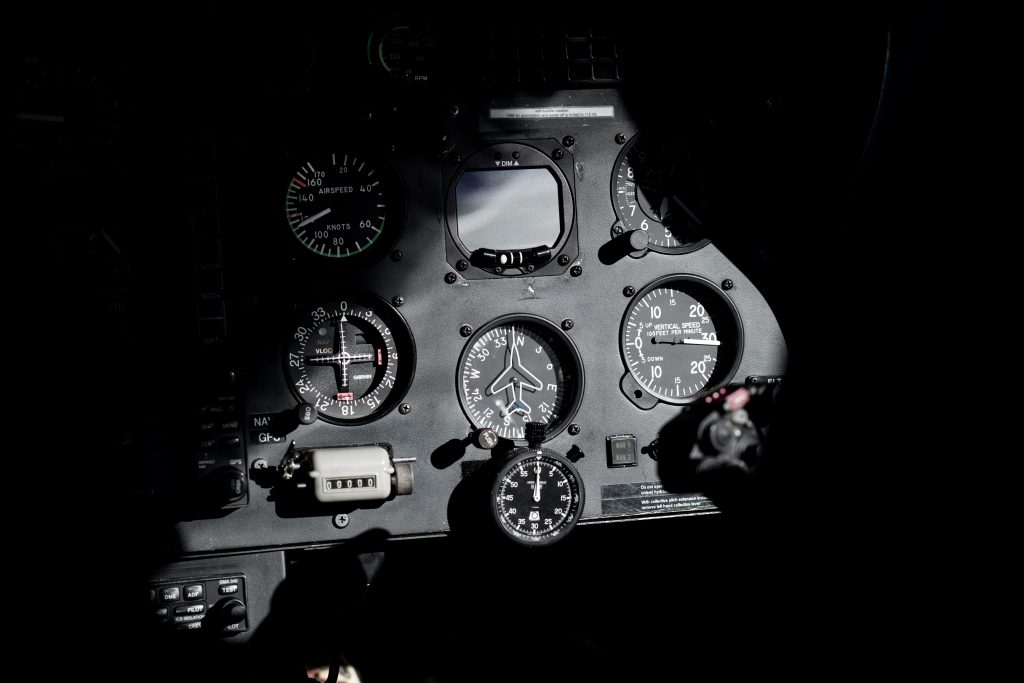
We probably all have one, or have had one in the past…client, that is, who’s decided to become a pilot. That client may be affluent enough to be able to afford an airplane. Maybe she’ll buy it in her company, or maybe she’ll own it personally. You’ve been the agent insuring the business, the home and the autos for years. So naturally, she comes to you when it’s time to insure that shiny new airplane.
The first thought that crosses your mind is, “How do I even start to do that?” That thought is barely ahead of, “None of my companies write aviation risks at all.” So, you’re going to head to a secondary source, like Arlington/Roe, for help in getting this aviation policy written.
But you still want to provide some service to your client and look reasonably well-informed and conversant about the process. What do you need to know? What do you need to do? What information do you need to gather? What follows are some basic guidelines on how to move forward on a simple aviation risk.
1. Don’t try to talk your client out of it. It probably won’t work, anyway.
Yes, flying is risky, and owning an airplane is, too. There’s a famous quote from Captain A. G. Lamplugh of British Aviation Insurance Group from the early 1930’s: “Aviation in itself is not inherently dangerous. But to an even greater degree than the sea, it is terribly unforgiving of any carelessness, incapacity or neglect.” However, for your client who has been, as we’ve assumed, lured to the thrill of the air, there’s an equally famous quote from Paul J. Sampson:
“We contrive to make the invisible air support us, we relinquish the security of feet on the ground because flying is demanding, delightful, beautiful: because we love it. Very few of us are actually crazy, and nearly all of us manage the risks as well as we can, but we all willingly trade some of our security for the immeasurable beauty of the sky.”
This quote may describe your client. If it does, stow your natural cautiousness and conservative approach and forge forward on the risk.
2. Gather some basic, pertinent information about the airplane – you’ll need it later to expedite applications.
Some of the information that you’ll need to know about the aircraft itself will seem rather obvious – it has a corresponding subject in personal lines auto or in garage policies. You’ll want to know:
- Who is the manufacturer and what is the make/model/type of aircraft? (Of course, you wouldn’t insure a car without knowing whether it was a Ferrari, Lamborghini, Taurus or a Malibu.)
- Does the plane have retractable landing gear?
- How many passengers fit?
- How old is the plane?
- When was the aircraft purchased? Is there a lienholder on it?
- At what airport is the craft hangared? (This is close to the equivalent of where it’s garaged; underwriters are going to want to know about things such as runway length, typical weather, visibility and the like.)
- FAA Registration Number? (This is about the same thing as a vehicle identification number or VIN.)
- What’s its maintenance history and when is its next servicing due? (This one’s not quite so intuitive, but maintenance plays a big role in aviation risk assessment.)
- What is the expected use? (For initial purposes, we’ll just want to know business versus pleasure and where the typical flights will be going, especially if the flights will be outside the continental United States. We may need to know more on this later, by inquiring about such things as if there is going to be a special use like crop dusting or firefighting.)
3. Find out who’s going to be driving…er, flying…this thing.
More so than with an auto policy, who’s going to be at the controls matters to the underwriting of the aviation risk. Experience pays off, and specific experience with a particular type of plane pays off even more handsomely in terms of reduced premium. According to Wells and Chadbourne, authors of the leading text in the field, Introduction to Aviation and Risk Management (2nd Ed.), “The premiums charged depend largely upon the experience and ability of the pilot. Insureds may improve their rates based on experience by verifying the total hours flown as a pilot-in-command and time in make and model…”
4. Let your insured know: who is at the controls really, really matters.
Aviation insurance policies contain something called a “pilot warranty.” There are two types of pilot warranties: open and named. The “named pilot warranty” is what the title suggests – there are specific individuals named directly in the policy who are insured when they are piloting the aircraft. An “open pilot warranty,” on the other hand, does not name individuals. Instead, it describes, but does not name, who can captain the plane.
Wells and Chadbourne provide an example of an open pilot warranty, which contains some familiar policy
phraseology:
“[There is no insurance unless] the pilot in command has: a valid and current transport
certificate; with appropriate ratings for the flight involved; with a valid medical certificate;
[and] at least 500 hours as pilot-in-command of which 50 were in an aircraft with
retractable landing gear and 10 hours in the model aircraft being flown.”
5. Some of the policy clauses and phrases are going to look familiar.
While there is no “standard” industry form per se, an aircraft policy is neither completely unfamiliar nor incomprehensible to an insurance professional. Aviation insurance has existed for just over 100 years. Over those years, the structure and language of aviation forms has been shaped and influenced by some of the more ordinary, everyday sources.
An example is the fact that an aviation policy insures against both liabilities and property damage to the plane itself. The latter of these is called “hull coverage.” It is simply a borrowing of the marine term for the “ship.”
Hull coverage can get a bit complicated, though. Historically, hull coverage was written on a named perils basis, such as fire, explosion, lightning, and the like. Now, hull coverage is written on an all-risks basis, but it does have important limitations or conditions within it. Essentially these different conditions ask, “Is the plane moving or is it flying?” There are three different possibilities for hull coverage:
- All risks, ground and flight. This “provides all risk hull coverage for the described aircraft whether or not the aircraft is in flight at the time of loss” according to IRMI and is the broadest form of hull coverage.
- All risks, not in motion. This “provides all risk hull coverage for the described aircraft while not in motion, i.e., on the ground and not in motion under its own power. Coverage applies for a loss occurring while the aircraft is being pushed or towed. A taxiing aircraft is
considered to be in motion.”
- All risks, not in flight. This would cover taxiing but not flight.
6. Just like hull coverage, liability coverage in aviation has some wrinkles to it, too.
The ownership or pilot of a plane has, under the basic approach to aviation risks, four different types or options for liability coverage. These options are not mutually exclusive so that more than one can be selected. The options are:
- Bodily Injury Excluding Passengers
- Passenger Bodily Injury
- Property Damage Liability
- A Single Limit Bodily Injury and Property Damage (also known as the “smooth” limit)
Make sure your pilot or airplane owner is making the proverbial apples-to-apples comparison when reviewing available liability limits and their costs. Many insurers will put in place “sublimits” on a per passenger or a per seat basis. The idea is to cap the carrier’s liability for each individual claim for injury or death without any consideration of how many claimants there might be.
Also, keep an eye out for exclusions in the liability arena. Several are noteworthy, including: flights needing a waiver from the FAA; flights when the “Certificate of Airworthiness” is not in effect; flights for an unlawful purpose; and passenger overload. There are also usually exclusions for things such as liability assumed under contract (but it might carve out incidental airport use agreements).
7. Aviation isn’t just pilots and planes.
We’ve worked from a simple premise here: a long-time insured becomes a pilot, purchases (or leases) a plane, and wants insurance. That premise is not farfetched: about two-thirds of the private (non-airline) aircraft registered with the FAA are for personal, as opposed to business and instructional, purposes. Aviation risks arise, though, from more than just this scenario. Commercial producers can encounter aviation risks or challenges concerning maintenance facilities, service providers, parts suppliers, or even local airports themselves. Workers’ compensation and fuel storage tanks (especially underground storage tanks) are just a few of the aviation insurance difficulties that can be encountered. Arlington/Roe’s aviation team is available to assist as needed.